

From claim evidence to a signed figure.
ProviX reads the claim's own evidence, builds a valuation you can follow from source to signature, and checks it before anyone sends an offer. A person decides. ProviX shows the working.
Evidence in
A case starts with what the claim already has: the registration, the mileage, photos of the car and any documents.
- One vehicle. Registration, mileage, tagged photos and documents, entered on the case page.
- Many vehicles. One row per vehicle from a spreadsheet, with a folder of photo packs, each becoming its own case.
- A capture file. A sealed pack from the ProviX capture app. Every photo is checked against the pack’s own list before it is accepted.
Seven engines
Each engine has one job, and each one’s result is shown in the report with where it came from.
- 1Evidence intake. Takes in the registration, mileage, photos and claim documents the valuation is built on.
- 2Vehicle identification. Resolves the vehicle from DVLA, DVSA MOT and market data, and checks it against the photos.
- 3Damage evaluation. Proposes numbered damage findings from the photos and costs each damaged panel.
- 4Market comparables. Finds live comparable listings and keeps a price only if it is written on the page it was read from.
- 5Depreciation and salvage. Accounts for age and mileage, and the total-loss severity where it applies.
- 6Fraud and integrity. An advisory screen for a person to read. It never blocks a claim and never accuses anyone.
- 7Final valuation. Brings the inputs together into a figure with a 90% range, advisory until a person signs.
When it should not answer
When the evidence is too thin or too contradictory to value, ProviX says so rather than inventing a figure, and the case goes to a person with the reason stated. Those cases get no offer verdict.
Before the offer goes out
The same checks run on every claim. A tenant's admin can adjust some thresholds within set limits, with the change recorded against their name.
A low first offer is flagged
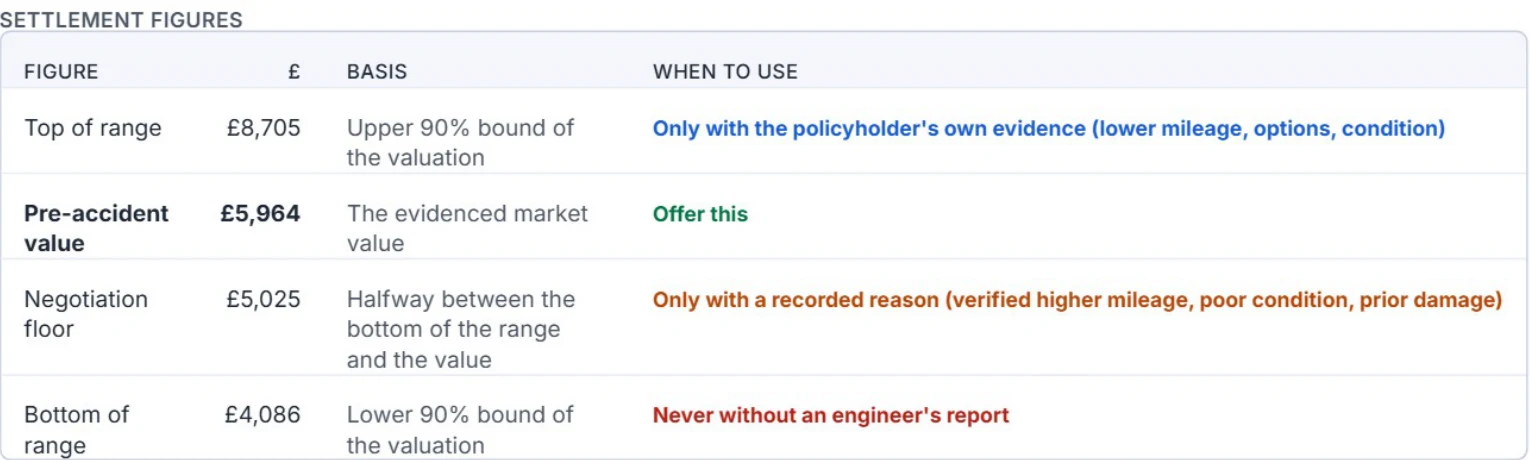
Each offer is checked before it goes out. A low offer is flagged, and going ahead with it needs evidence on file.
Every deduction needs its own evidence
Blanket deductions are flagged and left out of the net figure. The policy excess is the one exception, because it is contractual.
Disagreements wait for a person
When the registration record and the photos disagree, the report says so and approval waits until someone resolves it.
Engines propose. Humans sign.
A named handler approves the valuation. The models only propose, and nothing reaches the policyholder on its own.
The decision is sealed
Once signed, the case record is sealed. A later edit to a sealed figure shows up when the case record is verified.
Signed, sealed, reported
Signed. A named handler approves the valuation. The models only propose. Letters are drafts that a person sends under their own name.
Sealed. The approved record is sealed on the case. A later edit to a sealed figure shows up when the case record is verified. Try it on a sample record.
Reported. Management reports come from the decisions themselves: deviation from the market evidence, the low-offer rate and deduction compliance, broken down by handler and channel.
See every page of the sample report.